


Quick Answer
A Payroll Cost Calculator shows the actual monthly cost of an employee to an employer in India — not just the salary you offered, but salary plus Employer PF, ESI (if applicable), Gratuity provision, and other statutory add-ons. Most business owners only budget the gross salary and get surprised later when the real cost turns out 15-20% higher.
Hiring an employee isn’t just about deciding the monthly salary. As an employer you also need to know about statutory contributions and other payroll-related costs that increase your actual hiring budget. Here i want to share about a support ticket that my team received recently.
A business owner contacted us after finalizing a candidate at ₹50,000 per month. Before releasing the offer letter, he asked us a simple question:
“Priti, if I offer ₹50,000 per month, how much will this employee actually cost my company?”
It’s a question we hear quite often.
Believe me, this is one of the most common mistakes we see, many employers assume that the employee’s salary is the company’s total cost. But the employer may also need to account for Provident Fund (PF), Employees’ State Insurance (ESI), gratuity provisions, and other payroll-related expenses, depending on the salary structure and statutory applicability. Everyone talks about CTC. Nobody talks about what the employer actually pays on top.
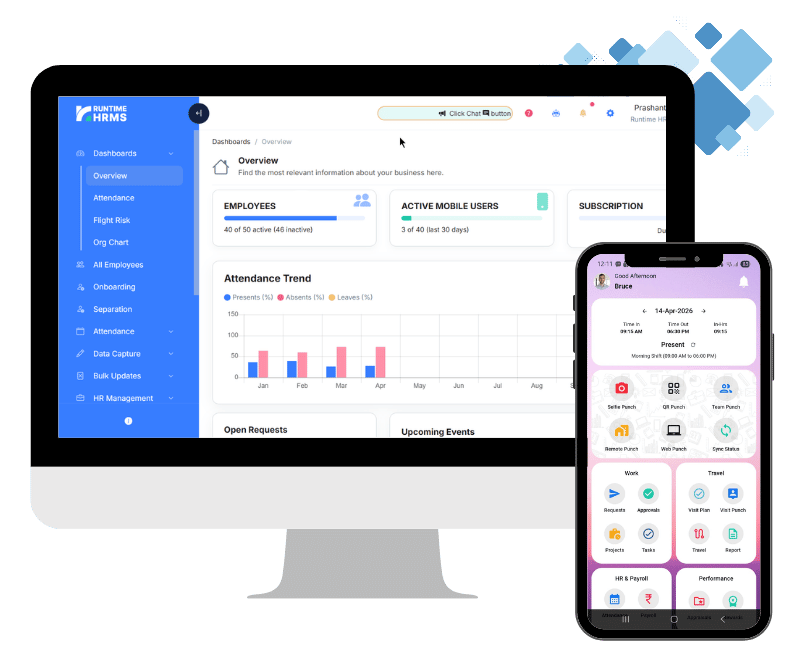
This is exactly why my team at Runtime HRMS built this Payroll Cost Calculator. Use the Payroll Cost Calculator below to estimate your employer payroll cost in seconds.
What is Payroll Cost?
Payroll cost is the total amount an employer spends to hire and retain an employee. It includes not only the employee’s salary but also statutory employer contributions and other employment-related expenses.
Here’s the confusion we see all the time: a business owner offers ₹50,000 salary and assumes that’s what leaves the bank account every month. It’s not. Payroll cost is what you actually spend to keep that employee on your books — salary plus your side of PF, ESI, gratuity, and a few other statutory pieces, depending on how the salary is structured.
So, on a ₹50,000 gross salary, your real cost could quietly cross ₹54,000. Doesn’t sound like much for one employee. Now multiply that gap across 20 hires — suddenly it’s a number your finance team notices. This is exactly why we tell clients: don’t finalize a salary offer or a hiring budget before checking your actual payroll cost, not just the number on the offer letter.
That’s why we tell every client the same thing — run this number before you sign the offer letter, not after.
What Is Included in Payroll Cost?
Payroll cost is more than just an employee’s salary. Depending on your company’s salary structure and statutory obligations, the total employer cost may include several components.
The table below explains the most common payroll cost components in India:
| Payroll Component | Description |
| Monthly Gross Salary | The total monthly salary agreed with the employee before statutory deductions. |
| Employer Provident Fund (PF) | The employer’s contribution towards the Employees’ Provident Fund, where applicable. |
| Employer ESI | Employer contribution towards Employees’ State Insurance for eligible employees under the applicable wage limit. |
| Gratuity Provision | An estimated monthly provision towards gratuity payable to eligible employees under the Payment of Gratuity Act. |
| Bonus | Statutory or company-paid bonus, if applicable. |
| Other Employer Costs | Additional expenses such as insurance, food allowance, uniforms, training, or other employee benefits. |
Why This Matters Most During Hiring and Appraisal Season
Let’s check why this actually matters:
At offer stage — HR quotes a CTC to the candidate without knowing the true employer-side cost, then finance pushes back later.
During appraisal season — a 10% hike across 30 employees doesn’t just cost 10% more. It costs 10% more plus proportionally higher PF, ESI, and gratuity — often an 11-12% real increase.
During budgeting — founders plan next year’s headcount using gross salary numbers alone, and the actual payroll budget runs short by lakhs.
Check more PF compliance update with: EPFO →
What Our Payroll Cost Calculator Does
We built this tool directly for Indian SMB owners and HR teams, just straightforward numbers for straightforward Indian payroll.
You enter:
- Monthly Gross Salary for one employee
- Number of Employees (so you can see cost for one hire or your whole team)
And it instantly calculates:
- Estimated Employer PF
- Employer ESI Contribution (where applicable)
- Estimated Gratuity
- Estimated Monthly and Annual Payroll Cost
- Total Team Payroll Cost — useful when you’re budgeting for multiple hires at once, not just one
No signup, no spreadsheet, no waiting for your accountant to run the numbers. Thirty seconds and you know your real number.
Why Payroll Cost Matters and How It Calculated?
The calculation itself isn’t complicated. It’s basically:
Payroll Cost = Gross Salary + Employer PF + Employer ESI + Gratuity + Other Employer Costs (if applicable)
Once you know this number, budgeting stops being guesswork. You stop planning hires around gross salary alone and start seeing what each person actually costs you. Recruitment budgets hold up better as the team grows, and you’re not caught off guard by PF or ESI adding up somewhere down the line.
At Runtime, this is the first thing we ask a client to check before they approve a salary offer.
Example
Suppose you’re planning to hire an employee with a Monthly Gross Salary of ₹50,000.
| Component | Amount |
| Monthly Gross Salary | ₹50,000 |
| Estimated Employer PF | ₹3,000 |
| Estimated Employer ESI | ₹0 |
| Estimated Gratuity | ₹1,203 |
| Estimated Monthly Payroll Cost | ₹54,203 |
See How Runtime Handles This For You
Knowing your payroll cost is step one. Actually managing it every month — without spreadsheets, without last-minute PF/ESI surprises — is where Runtime comes in.
[Book a Free Demo →] and we’ll show you exactly how it works for a team your size.
Also Try Our Other Calculcators