

Someone asks: “How much bonus are we paying this year?” Someone else pulls up a spreadsheet. A third person isn’t sure whether to calculate on actual salary or some capped amount. And a fourth person quietly asks whether the company can skip it this year because profits were low. The answer to that last question is no. Statutory bonus is not optional. It is not a Diwali gift or a performance reward at the employer’s discretion.
It is a legal obligation under the Payment of Bonus Act, 1965 – and getting it wrong, or missing the deadline, invites penalties, labour inspector visits, and very unhappy employees. Let me walk you through everything you need to know – who qualifies, how to calculate it correctly, and what most companies get wrong.
Who Has to Pay Statutory Bonus in India?
The Payment of Bonus Act applies to every factory with 10 or more workers, and every other establishment with 20 or more employees on any day during the accounting year.
Once you cross that threshold, the obligation continues – even if your headcount later drops below the limit. And in several states including Karnataka, Kerala, Andhra Pradesh, Gujarat, and Haryana, the Act has been extended to establishments with 10 or more employees. Worth checking your state’s specific rules.
Check with: CLC (Chief Labour Commissioner)
Who is Eligible to Receive Bonus?
An employee is eligible for statutory bonus if their monthly Basic Salary plus DA does not exceed ₹21,000, and they have worked for at least 30 working days in the accounting year. This eligibility ceiling catches a lot of small companies off guard. It applies to Basic + DA – not gross salary. So an employee drawing ₹25,000 gross but ₹19,000 basic + DA is eligible.
Employees on paid leave, maternity leave, or lay-off are counted as having worked during those days. So you can’t exclude someone from bonus eligibility just because they were on approved leave. What about employees who leave mid-year? If they worked 30+ days before leaving, they are eligible for pro-rata bonus – which should be settled as part of Full and Final Settlement. This is a step many HR teams miss.
Statutory Bonus Calculation Formula
The eligibility ceiling is ₹21,000 per month. But the calculation ceiling is different – it is ₹7,000 per month or the applicable state minimum wage, whichever is higher.
So an employee earning ₹18,000 basic + DA is eligible – but their bonus is not calculated on ₹18,000. It is calculated on ₹7,000 (or state minimum wage if higher). This is the rule that trips up most payroll teams.
The formula:
Statutory Bonus = Capped Monthly Salary × 12 × Bonus Percentage
- Where Capped Monthly Salary = lower of (actual Basic + DA) or ₹7,000 (or state minimum wage, whichever is higher)
- And Bonus Percentage = between 8.33% (minimum) and 20% (maximum)
- Most SMEs with moderate profits end up paying the minimum 8.33%.
Three examples to make this concrete:
Example 1 – Employee earning below ₹7,000 basic + DA
Ramu’s Basic + DA = ₹6,000/month. State minimum wage = ₹5,500.
Since his actual salary (₹6,000) is below the ₹7,000 cap, calculate on actual amount.
Bonus = ₹6,000 × 12 × 8.33% = ₹5,997.60
Example 2 – Employee earning above ₹7,000 but below ₹21,000
Priya’s Basic + DA = ₹14,000/month. State minimum wage = ₹6,500.
Since ₹14,000 exceeds the cap, and minimum wage (₹6,500) is lower than ₹7,000, cap at ₹7,000.
Bonus = ₹7,000 × 12 × 8.33% = ₹6,997.20
Example 3 – State minimum wage higher than ₹7,000
Amit’s Basic + DA = ₹18,000/month. State minimum wage = ₹9,500.
Since minimum wage (₹9,500) is higher than ₹7,000, calculate on ₹9,500.
Bonus = ₹9,500 × 12 × 8.33% = ₹9,495
This last example is why you cannot use a single national formula for all employees across different states. The state minimum wage variable changes the number significantly.
Is Bonus Taxable?
Yes – and this surprises some employees who assume bonus might be tax-free like certain other benefits. Statutory bonus is treated as salary income and taxed at the employee’s applicable slab rate. It needs to show up in their Form 130 and must be factored into your TDS calculations for the year it’s paid. One thing that often confuses HR teams – bonus does not attract PF or ESI. It sits outside the wage definition for those Acts, so no additional statutory deductions on the bonus amount.
How Runtime HRMS Handles Statutory Bonus
The most painful part of statutory bonus for HR teams is not the calculation itself – it’s tracking who is eligible, which state minimum wage applies, how many days each person worked, and whether anyone left mid-year and needs pro-rata.
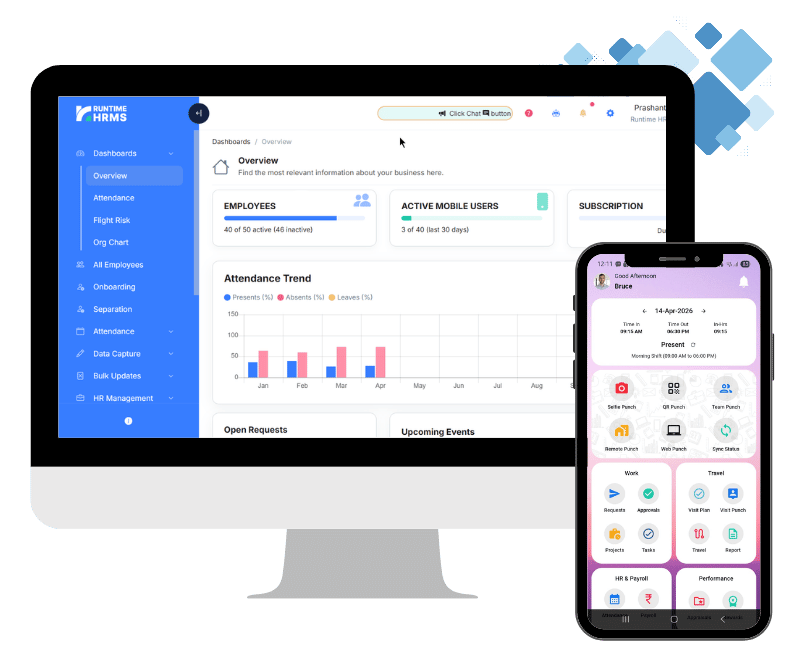
We built Runtime HRMS to handle exactly this. Feed in your employee data – Basic + DA, state, days worked – and the system identifies eligible employees, applies the correct calculation ceiling for that state, and generates your bonus register ready for payment. If someone exits before bonus season, their pro-rata amount flows into the Full and Final Settlement automatically. Nothing slips through.