

Payroll & Compliance in Pune is slightly different from Mumbai; it is the second largest city in Maharashtra. Like Mumbai, Pune falls under the state’s strictest compliance zone. But the businesses here are different. Pune has mixed economy like IT services and software companies in Hinjewadi and Kharadi, automotive and manufacturing plants in Pimpri-Chinchwad and Chakan, pharma companies in Hadapsar.
A software company in Hinjewadi and an auto parts manufacturer in Pimpri-Chinchwad are operating under the same Maharashtra minimum wage framework — but their worker categories, shift structures, and compliance risks are completely different. I have tried to cover all the compliance related requirements and issues in this article, let’s check them out.
Pune’s Zone Classification
Pune falls under the Pune Metropolitan Region (PMR) — which is classified under Zone I of Maharashtra’s minimum wage structure. Zone I carries the highest minimum wages in the state, alongside Mumbai’s Municipal Corporation areas.
The PMR covers Pune Municipal Corporation, Pimpri-Chinchwad Municipal Corporation, and surrounding areas. If your business is within these limits — you’re in Zone I. If you operate in areas beyond PMR boundaries — Talegaon, Chakan beyond the industrial belt, some areas of Mulshi — the zone classification may differ. Worth checking your exact location against the Maharashtra Labour Department notification.
The Three-Component Structure
Maharashtra minimum wages are not a single number. They have three components — Basic wage, HRA (approximately 5% of basic), and VDA (Variable Dearness Allowance). All three must be paid correctly. Inspectors verify each component separately.
For the current period, the VDA stands at ₹3,900 per month. This gets revised every six months — January and July.
Pune’s Manufacturing Sector — Additional Compliance
If your Pune business is a factory — registered under the Factories Act — additional requirements apply beyond the standard Shops and Establishments framework.
Factory workers must be covered under the Factories Act’s provisions for working hours, overtime, health and safety, and welfare facilities. Overtime for factory workers is at 2× the ordinary rate — and after the January 2026 Supreme Court ruling, the ordinary rate for factory workers includes Basic wages plus all allowances, not just Basic and DA. If your factory was calculating overtime on Basic + DA alone, the calculation needs to be updated.
Professional Tax
Pune businesses must deduct and remit Professional Tax for every eligible employee. PT in Maharashtra follows a standard slab structure — but there’s a Pune-specific detail that trips up payroll teams every year.
Maharashtra PT slabs for salaried employees:
| Monthly Gross Salary | PT Per Month |
| Up to ₹7,500 | Nil |
| ₹7,501 to ₹10,000 | ₹175 |
| Above ₹10,000 | ₹200 (₹300 in February) |
The February ₹300 rule
Every February, PT deduction for employees earning above ₹10,000 gross is ₹300 instead of ₹200. This makes up the annual ₹2,500 cap (11 months × ₹200 = ₹2,200 + ₹300 in February = ₹2,500).
Professional Tax Exemption for Pune Women Employees
Maharashtra has a gender-specific PT rule. Women earning up to ₹25,000 per month are fully exempt from Professional Tax — regardless of their actual salary within that limit. Women earning above ₹25,000 gross pay ₹200/month (₹300 in February).
For Pune’s IT companies with significant women employees, this exemption can meaningfully reduce the PT deduction workload — but it requires your payroll system to handle the gender-based logic correctly.
Labour Welfare Fund — Maharashtra
LWF in Maharashtra is small in absolute terms but mandatory in filing.
Contributions:
- Employee: ₹12 per year
- Employer: ₹36 per year
- Total: ₹48 per year per employee
PF and ESI in Pune
PF and ESI follow national rules — same as the rest of India. But two things are worth calling out specifically for Pune.
PF
The Labour Codes brought a rule that hit Pune’s manufacturing sector harder than most — basic + DA must be at least 50% of total CTC. For factories that historically kept basic low to control PF outgo, the math has changed. Those shift allowances and production incentives sitting on top? If they’re pushing basic below the 50% threshold, they now get pulled into the wage base. Higher PF. Higher gratuity. No way around it.
ESI
IT companies in Pune tend to assume ESI doesn’t apply to them — because most of their developers and managers earn well above ₹21,000. Fair assumption for the tech team. But the security guard at the gate, the housekeeping staff, the canteen workers, the junior admin — these people almost always fall within the ESI threshold. And if they’re coming through a contractor who isn’t covering them properly, the principal employer’s liability kicks in. Check every worker category. Don’t assume.
Pune’s Compliance Calendar
| Deadline | Compliance |
| 15th of every month | PF and ESI deposit |
| 7th of every month | TDS deposit |
| Monthly | PT return (20+ employees) |
| February | VDA revision (Jan-Jun) — implement immediately |
| February | Deduct ₹300 PT instead of ₹200 |
| June 15 | Form 130 (TDS certificate) to employees |
| June / December | LWF deduction months |
| Every January | Shops Act annual return (Form R) |
| Half-yearly | LWF return Form A-1 |
| August | VDA revision (Jul-Dec) — watch for notification |
| November 30 | Statutory bonus payment |
Also check with: Maharashtra Labour Department →
How Runtime HRMS Helps Pune Businesses
Managing Pune’s compliance calendar manually — bi-annual VDA revisions, gender-specific PT exemptions, February ₹300 PT, factory vs office differentiation, LWF half-yearly filing — is exactly the kind of operational complexity that creates costly errors in a 1-2 person HR team.
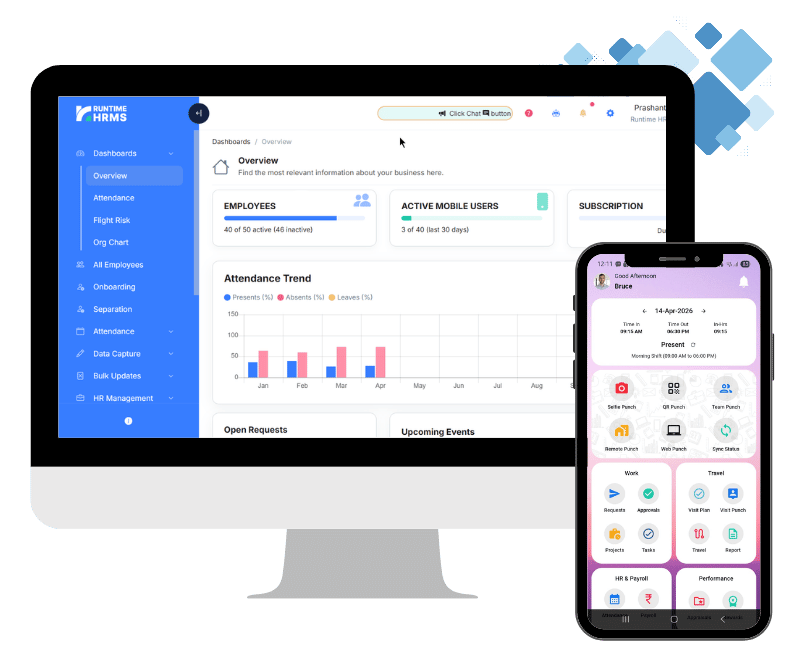
Runtime HRMS handles Maharashtra-specific compliance automatically. February comes — ₹300 PT deducts automatically, not ₹200. Women earning below ₹25,000 get the exemption applied without anyone having to remember. PF calculates on the right base — 50% rule factored in. And if you have both factory workers and office staff in the same company, both salary structures sit in the same system without any manual juggling.
Quick Summary
- Pune falls under Zone I (PMR) — highest minimum wages in Maharashtra
- Minimum wages have three components — Basic, HRA (5% of basic), VDA (₹3,900/month currently)
- VDA revision twice a year — February and August notifications
- PT: ₹175/month (₹7,501-₹10,000 gross), ₹200/month (above ₹10,000), ₹300 in February
- Women earning up to ₹25,000 gross are PT exempt in Maharashtra
- LWF: ₹12 employee + ₹36 employer per year — half-yearly filing mandatory
- Factory businesses under Factories Act have additional overtime and welfare compliance
- January 2026 SC ruling — factory overtime now calculated on full wages, not just Basic + DA
- Multiple office locations in Pune need separate Shops Act registrations
- 50% basic rule under Labour Codes 2025 affects PF base for manufacturing workers
Also Read: