

Quick Answer: What Is a Relieving Letter?
A relieving letter is an official letter from an employer confirming that an employee’s resignation has been accepted and that they are formally released from their duties on a stated last working day.
- It states the employee’s name, designation, date of joining and last working day.
- It is different from an experience letter, which describes the work the employee did.
- You can download editable Word formats below: standard, short, notice period bought out, combined relieving and experience letter, relieving order and relieving certificate.
Most employers issue it on or after the last working day, once handover and clearance are complete.
Relieving Letter Format: What HR Should Issue and When
Relieving Letter is one of the most important parts of FNF settlement of an employee. After they resigned, served the notice period and new job is waiting, the only thing holding them back is a relieving letter.
Sometimes it’s a delay. Sometimes it’s HR being overwhelmed. Sometimes – and this is the uncomfortable truth – it’s being used as leverage. None of these situations reflect well on the company. And all of them were avoidable. A relieving letter takes 10 minutes to issue. What it protects – for both the employee and the company – is worth far more than that.
Most relieving letters I see go wrong in one of two ways. Either the wording promises more than the company can confirm on the day, such as saying all dues are cleared while the settlement is still open, or it is missing the one detail the next employer’s background check looks for, which is the exact last working day. A good relieving letter is short, factual and consistent with your records.
Below are six formats you can adapt, followed by the questions HR teams and employees ask most often.
What a Relieving Letter Actually Does
Sometimes most HR managers think that a relieving letter is just a formality. It is something you issue when someone leaves, file it away, and forget about it. But for the employee this letter have three very specific things. It proves they resigned properly and served their notice – so no new employer can question their exit. It confirms there are no pending disputes or dues – which background verification agencies check for. And it establishes the exact last working date on record – which matters for PF transfers (EPFO), gratuity calculations, and sometimes even visa applications.
From the company’s side, the letter protects you too. It creates a clean documented end to the employment relationship. Without it, you’re leaving the exit open-ended – and that can create complications you don’t want. Now you are thinking that is it legally or mandatory? Technically, there is no specific central law mandates it for all employees. But the Shops and Establishments Act of most Indian states requires some form of service certificate on exit.
Relieving Letter vs Experience Letter
I need to clarify this because I see it confused constantly.
A relieving letter confirms the exit. It says – this person resigned, served their notice, completed formalities, and has been released from their duties as of this date. That’s it. Short, factual, focused on the exit. An experience letter confirms the tenure. It mentions the joining date, the last date, the designation, and usually a line about the employee’s conduct and contribution.
Both are issued when someone leaves. Most companies issue them together. But they serve different purposes – and in background verification, both are checked for different things. The relieving letter unlocks the next joining. The experience letter builds the employment record. Don’t combine them unless you’re using a specific “experience cum relieving” format common in IT firms.
What Goes Into a Proper Relieving Letter
Just keep it short and factual, don’t improvise the language. The letter should confirm the employee’s name and designation, the date they joined, their last working day, that their resignation was accepted, that they served the notice period, that all handover formalities are complete, that dues have been settled or are in process, and a standard closing wish for their future.
That’s it. The relieving letter is not the place for performance comments – that belongs in the experience letter. It’s not the place for conditions or warnings. It’s a clean, professional confirmation of exit.
One thing I always recommend – issue it on or before the last working day.
Issuing Relieving Letters One by One?
A relieving letter is only one part of employee separation. Runtime HRMS helps HR teams manage employee exit details, notice periods, clearances, Full & Final settlement and exit documents in a more connected process.
Explore Employee Separation Management →Free Relieving Letter Templates
Template 1 – Standard Relieving Letter
[Company Letterhead] Date: DD/MM/YYYY
RELIEVING LETTER
To Whomsoever It May Concern
Dear [Employee Name],
This is to confirm that [Employee Name], [Designation], [Department], Employee ID: [ID], has been relieved from their duties at [Company Name] with effect from the close of business on [Last Working Day].
[Employee Name] joined us on [Date of Joining]. Their resignation dated [Resignation Date] was accepted, and they have completed the notice period as per their employment agreement.
All handover formalities have been completed. Full and Final Settlement, including salary, leave encashment, and applicable reimbursements, has been processed.
We thank [Employee Name] for their contribution during their tenure and wish them all the best in their future endeavours.
For [Company Name],
[Authorized Signatory Name] [Designation] [Date] [Company Seal]
Template 2 – Short Format (Startup / Small Business)
[Company Letterhead] Date: DD/MM/YYYY
RELIEVING LETTER
Dear [Employee Name],
This letter confirms that you have been relieved from your position as [Designation] at [Company Name] effective [Last Working Day].
You served the company from [Date of Joining] to [Last Working Day] and completed all handover and exit formalities. Your Full and Final Settlement has been processed.
Thank you for your work with us. We wish you success in your next role.
[Authorized Signatory Name] [Designation], [Company Name]
Template 3 – When Notice Period Was Bought Out
[Company Letterhead] Date: DD/MM/YYYY
RELIEVING LETTER
Dear [Employee Name],
This is to confirm that [Employee Name], [Designation], has been relieved from their duties at [Company Name] effective [Date].
[Employee Name] joined us on [Date of Joining]. As per mutual agreement, the notice period shortfall of [X days] has been settled through payment in lieu of notice. All exit formalities have been completed and dues settled accordingly.
We wish [Employee Name] the very best in their future career.
For [Company Name],
[Authorized Signatory Name] [Designation] [Company Seal]
Download The Free Relieving Letter Format
You don’t need to draft a relieving letter from scratch every time an employee leaves. We’ve prepared three editable Word formats that HR teams can customize with employee details, employment dates and company information. First check the table and then choose the relevant relieving letter format.
Which relieving letter template should you use?
| Situation | Use this |
|---|---|
| Normal resignation, and you want a full, formal letter | Template 1: Standard Relieving Letter |
| You want a quick, minimal letter (startup or small team) | Template 2: Short Relieving Letter |
| The notice period was waived or paid in lieu | Template 3: Relieving Letter, Notice Period Bought Out |
| Your company issues one letter for both relieving and experience | Template 4: Combined Relieving and Experience Letter |
| Your process needs a formal order with an order number | Template 5: Relieving Order |
| The employee needs a certificate for a new employer or background check | Template 6: Relieving Certificate |
Not sure which one to pick? Start with Template 1
Template 1: Standard Relieving Letter
Use this when an employee has resigned and left on normal terms, and you want a complete, formal letter. It confirms the resignation, the last working day, and that handover is done. This is the safest default if you are unsure which one to pick.
Template 2: Short Relieving Letter
Use this when you want a quick, minimal letter, for example in a startup or a small team. It carries only the essentials: resignation accepted, last working day and settlement to follow. Choose it when you do not need the longer wording of the standard letter.
Template 3: Relieving Letter, Notice Period Bought Out
Use this when the employee did not serve the full notice and the shortfall was waived or paid in lieu. It records how many days were served and how the rest was adjusted, so the letter matches the full and final settlement statement.
Template 4: Combined Relieving cum Experience Letter
Use this when your company issues one letter for both purposes instead of two. It confirms the dates of employment, the role and the relieving in a single document, so there is no mismatch between two letters.
Template 5: Relieving Order
Use this when your organisation prefers a formal order, with an order number and an authorised signatory, for example in larger companies or when your internal process asks for an order. It is not addressed as a personal letter to the employee.
Template 6: Relieving Certificate
Use this when the employee asks for a certificate confirming that they have been relieved and have no pending handover. It is often requested by a new employer or a background verification agency.
Free Employee Exit Checklist for HR
Employee exits involve much more than issuing a relieving letter. Use this practical HR checklist to make sure important payroll and clearance steps are not missed.
How Runtime HRMS Handles Relieving Letters
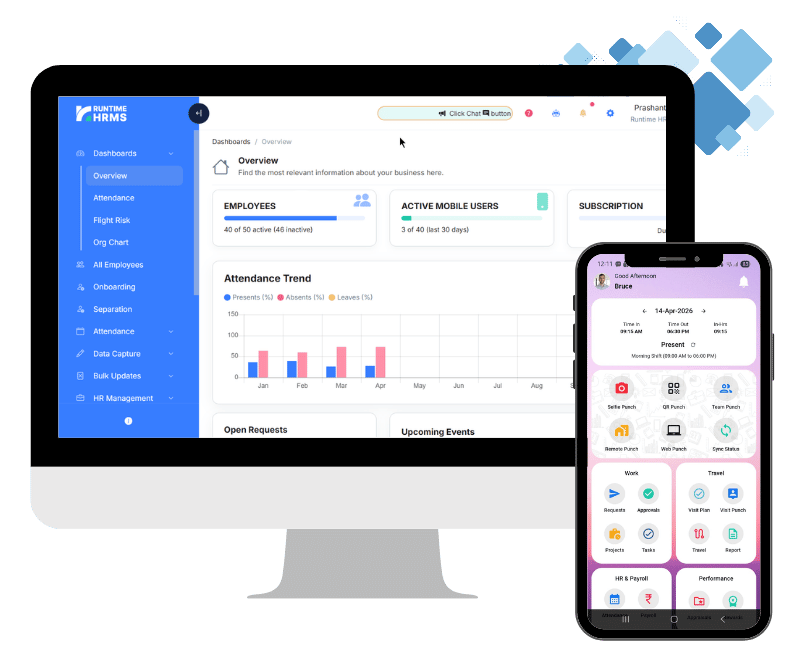
When an employee’s exit is processed in Runtime HRMS, the relieving letter is generated automatically from a pre-set template – with the correct dates, correct designation, and company letterhead already in place. HR reviews it, approves it, and the employee receives it on their self-service portal.
No Word file hunting. No manual date entry. No risk of the joining date being wrong because someone typed it from memory. For companies processing multiple exits in a month, this saves significant time and ensures every letter is consistent and professionally formatted.
Runtime HRMS keeps the employee-exit information connected so the relieving letter can use the same employee details and exit dates already recorded during separation.
- Resignation and last working date
- Notice period tracking
- Exit clearance
- Full & Final settlement
- Leave encashment
- Relieving letter
- Experience letter
- Exit documentation
An Employee’s Last Day Shouldn’t End With Missing Documents
A relieving letter, Full & Final settlement, leave encashment and exit documents may feel like routine HR work – but for the employee, they are the final proof that their journey with your company ended properly. Runtime HRMS helps you keep the exit process organised, timely and professional.
See Employee Exit Management in ActionCheck Our Employee Exit Related Resources
FAQS
Is a relieving letter mandatory?
To the best of my knowledge there is no single central law that prescribes a standard relieving letter format, so employers issue it as per their policy and employment contract. In practice, new employers and verification agencies commonly ask for it, which is why most companies issue one. Check your contract and confirm any legal question with a labour law professional.
What is the difference between a relieving letter and an experience letter?
A relieving letter confirms that the employee has been released from duties and gives the last working day. An experience letter describes the employee’s role, designation and period of service. Many companies issue them separately, and some issue one combined letter.
What should a relieving letter include?
The employee’s name and employee ID, designation, department, date of joining, date of resignation, last working day, confirmation that the resignation is accepted and the employee is relieved, and the authorised signatory’s name and designation, on company letterhead.
How do you write a relieving letter when the notice period is bought out?
State the notice period applicable, how much was served, and that the remaining days were waived or adjusted through payment in lieu, as shown in the full and final settlement. Template 3 above has this wording.
Can I download a relieving letter format in Word?
Yes. The editable Word formats are available above.